


The experience of urban commons in Naples represents a paradigm of social and legal innovation that has gained international recognition. Through the introduction of the institution of Usi Civici e Collettivi Urbani (Urban Civic and Collective Use Rights), the city has overcome the public-private dichotomy…
DSU Policy Brief
- Published on
- Last updated
DSU Policy Briefs summarise the main findings of research on a relevant topic and, on this basis, explore the implications for policy and social debate. This may include a discussion of how policies could be more effectively implemented and evaluated, considering the particular contexts they impact.
Editorial Board
Rosanna Amato, Giulia Antonini, Igor Benati, Antonella Emina, Lorenzo Nannipieri, Fabrizio Pecoraro, Claudia Soria.
Scientific Committee
Daniele Archibugi, Igor Benati, Maria Eugenia Cadeddu, Antonella Emina, Monica Monachini, Lorenzo Nannipieri, Fabio Paglieri, Fabrizio Pecoraro, Ginevra Peruginelli, Carla Sfameni, Claudia Soria.
24 publications — DSU Policy Brief

In recent years, gender equality certification has become a key policy instrument in Italy, supported by a solid national framework and regional implementation measures targeting SMEs. However, territorial implementation shows important weaknesses. Regional interventions are heterogeneous and often fragmented, with significant differences in tools and…

This policy brief critically re-examines dominant narratives on climate migration in Africa, with a particular focus on Namibia, questioning the prevailing narrative that frames climate change as a linear, dominant driver of human mobility. In a context of accelerating climate change and increasing forced migration…

The international cooperation system is undergoing a profound transformation. The traditional North-South aid model has fragmented with the emergence of new global players (China, India, Brazil) and South-South partnerships. At the same time, Western Official Development Assistance (ODA) is in crisis, shrinking in volume and…

In Italy, a country with one of the highest life expectancies in the world, physical inactivity and a sedentary lifestyle are among the main modifiable risk factors for chronic non-communicable diseases. In particular, childhood obesity has reached critical levels, with a national average of over…
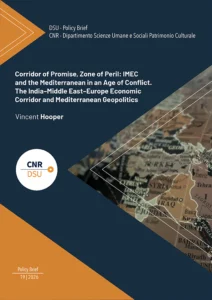
The India–Middle East–Europe Economic Corridor (IMEC) represents a transformative infrastructure initiative linking India to Europe via the Gulf, offering a strategic alternative to China’s Belt and Road Initiative. With the Mediterranean serving as its critical junction, IMEC promises to reduce shipping times by up to…

This policy brief analyses the relationship between corruption and economic growth in Italy’s twenty regions over the period 1991–2015, focusing on how different forms of corruption affect the effectiveness of public spending. The study here reported (Capasso Santoro, 2025), distinguishes between active corruption—a coercive form…

This document presents an integrated approach to Accessible Pathways, conceived as landscape experiences to be enjoyed independently and safely, while addressing the needs of every individual. Landscape accessibility allows people to reach and appreciate cultural and natural sites in line with the principles of participation…

From the first steps beyond the atmosphere to today’s most recent developments, human activity in space has achieved extraordinary progress. Rapid innovation in this field ranges from scientific research on celestial bodies and the potential exploitation of their resources, to satellite technologies used for Earth…
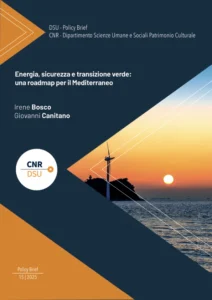
The Mediterranean is at the center of increasingly complex energy, environmental, and geopolitical dynamics. The transition to renewable sources, accelerated by the climate crisis and recent conflicts (Ukraine, Israel-Gaza), is intertwined with the urgent need to ensure energy security and regional stability. This policy brief…
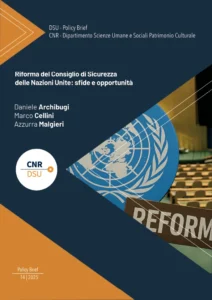
The reform of the United Nations Security Council (UNSC) is one of the most debated issues in the international political and diplomatic sphere for at least three decades. The current composition of the UNSC is the result of an outdated geopolitical arrangement, which does not…
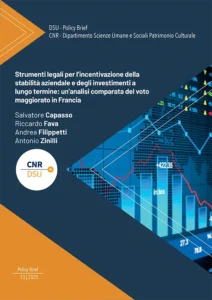
The policy brief examines the enhanced voting rights introduced in France in 2014 through the Florange Law and later adopted in Italy as a tool to encourage corporate stability and promote long-term investments. In France, enhanced voting rights were made automatic unless companies chose to…